
Crisper Drawers and Humidity Zones · 6 min read
How Sub-Zero Crisper Drawers and Humidity Zones Keep Food Fresh (Santa Clara)
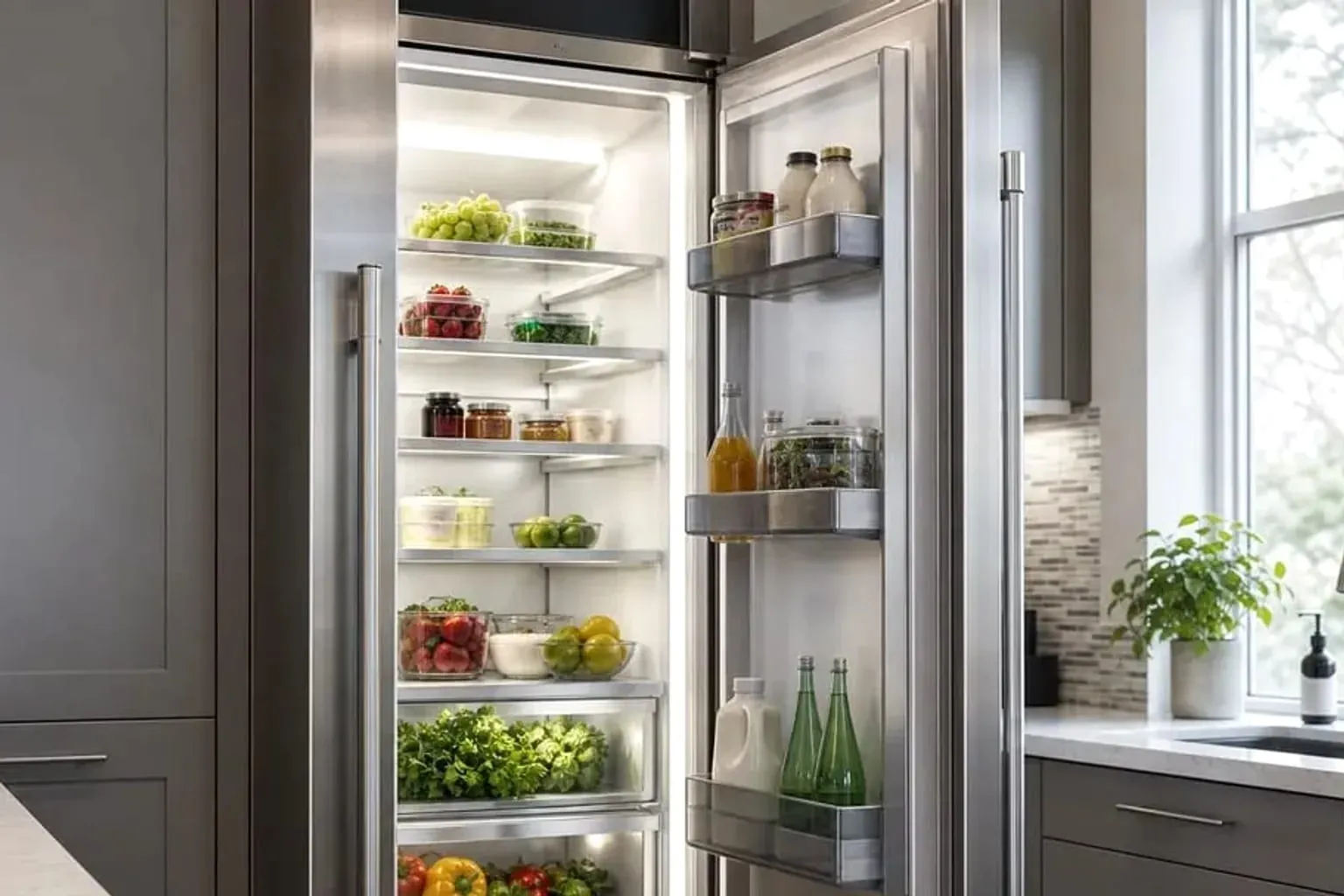
A Sub-Zero refrigerator keeps food fresh by pairing a dedicated fresh-food compressor that holds the cabinet at a steady 38 degrees with sealed crisper drawers that trap humidity near 95 percent around your produce. Close the drawer vent for leafy greens, open it for ethylene-producing fruit, and most produce lasts roughly twice as long as it does in a single-compressor refrigerator. That holds across the lineup, from 500 and 600 series Classic units to the current Designer columns.
Rivermark and Old Quad families who bring home a full week of produce in one Saturday market run lean hard on the Sub-Zero crisper system. Santa Clara kitchens in the 95050 and 95051 zips often sit below 40 percent indoor humidity from June through September, and that dry air pulls moisture out of anything stored loose on a shelf. This guide covers how the freshness system works, how to set each drawer, and how to tell a hardware fault from a habits problem.
How does a Sub-Zero keep produce fresh longer than a standard refrigerator?
Dual refrigeration is the single biggest reason a Sub-Zero preserves produce longer than a conventional fridge. The fresh-food compartment runs on its own compressor and evaporator, completely separate from the freezer, so dry sub-freezing air never blows across your food. A single-compressor refrigerator pushes freezer air into the fresh-food section on every cooling cycle, and that air acts like a desiccant, stripping water from lettuce, herbs, and berries within days. The dedicated Sub-Zero system also limits temperature swings to about one degree, which prevents the repeated condense-and-dry cycle that ages produce fast.
The Sub-Zero air purification cartridge adds a second layer of protection on newer Designer and PRO models. The cartridge, built on scrubber technology originally developed for NASA, cycles cabinet air past it roughly every 20 minutes and removes ethylene gas, the ripening hormone that fruit releases, along with odors, mold spores, and bacteria. Less ethylene circulating above the drawers means slower ripening inside them.
What do the crisper drawer humidity settings actually control?
The humidity control on a Sub-Zero crisper drawer is a simple mechanical vent, not an electronic sensor. Slide the vent closed and the drawer becomes a sealed chamber where moisture released by the produce itself builds toward 90 to 95 percent relative humidity. Slide the vent open and the drawer exchanges air with the main cabinet, letting extra moisture and ethylene escape instead of concentrating around the food. The slider is easy to overlook because nothing lights up or beeps when it sits in the wrong position.
Neither Sub-Zero drawer position is better in general - each one suits a different kind of food. A sealed, humid drawer keeps water inside plant cell walls, so greens stay turgid and crisp. A vented drawer keeps ripening gases from building up, so fruit that spoils by rotting rather than wilting holds on for extra days. Owners who park both drawers on one middle setting give up most of the benefit of having two separate zones.
Which foods belong in the high humidity drawer and which in low?
The sorting rule for Sub-Zero crisper drawers is short: if it wilts, seal it; if it rots, vent it. High humidity, with the vent closed, suits lettuce, spinach, kale, fresh herbs, broccoli, carrots, and green onions - produce that fails by losing water. Low humidity, with the vent open, suits apples, pears, avocados, stone fruit, and melons - produce that fails by over-ripening in its own ethylene.
Mixing the two groups in one Sub-Zero bin is the most common freshness mistake we find in Santa Clara kitchens. One apple sealed beside spinach floods the bin with ethylene and yellows the greens in two or three days. Keep the gas producers vented and the gas-sensitive greens sealed, and a Saturday farmers market haul routinely reaches the following weekend.
Tomatoes, bananas, and avocados that still need ripening do better on the counter than in any Sub-Zero drawer. Chill them only once they reach peak ripeness, then use the low-humidity bin at that point to stretch the last few days.
Why do crisper drawers dry out faster in Santa Clara kitchens?
Santa Clara's dry summer air works directly against the humidity inside a Sub-Zero cabinet. From June through September, indoor readings in 95050, 95051, and 95054 homes commonly fall into the 30 to 40 percent range, and every door opening trades the moist air inside the unit for that dry room air. The crisper drawers are the buffer against that exchange, but only while their seals stay intact.
Aging hardware compounds the dry-air problem on older Sub-Zero units around the Old Quad and Forest Park. On 500 and 600 series models that are 15 to 25 years old, drawer channels wear, bin fronts stop seating squarely, and the magnetic door gasket hardens until it leaks dry air around the clock. Rivermark's newer open-plan kitchens see the opposite pressure: constant traffic past the unit means more door openings per day than most owners realize. Either way, a bin that no longer closes flush cannot hold 90 percent humidity no matter where the slider sits.
How can you tell when the crisper system needs repair?
Greens that wilt within two days inside a correctly set Sub-Zero drawer point to hardware, not habits. The usual culprits are a cracked bin front or broken drawer glide that keeps the bin from sealing, a hardened door gasket bleeding humidity, or an evaporator or defrost fault quietly freeze-drying the whole compartment. Water pooling under the bins is a different failure, usually a scaled-up defrost drain, and deserves its own diagnosis.
A Sub-Zero diagnostic visit separates a seal fault from a cooling fault in a single pass. Frost patterns on the evaporator coil, compression marks on the door gasket, and the way each bin tracks on its glides all point to the true cause. Drawer glides, bin fronts, and gasket kits are inexpensive parts for most 500, 600, and 700 series units, and that class of repair typically lands at the cheaper end of a service visit.
What should you check at home before booking a service visit?
Five quick checks resolve a surprising share of Sub-Zero freshness complaints. First, load each crisper drawer no more than about two-thirds full so air can move - an overstuffed bin crushes and sweats whatever sits at the bottom. Second, confirm the refrigerator setpoint reads 38 degrees. Third, wipe the drawer channels and bin-front seal so the drawer closes flush. Fourth, match the vent slider to what the drawer actually holds. Fifth, replace the air purification cartridge if it is more than 12 months old.
If produce still fades after those five steps, the Sub-Zero itself needs attention. Our service call in Santa Clara is $89, waived when you approve the repair, and most drawer, glide, and gasket work is finished in a single visit. A seasonal tune-up catches worn seals before your groceries pay for them.