
Sub-Zero 650 Case Story · 8 min read
The Sub-Zero 650 That Froze the Lettuce
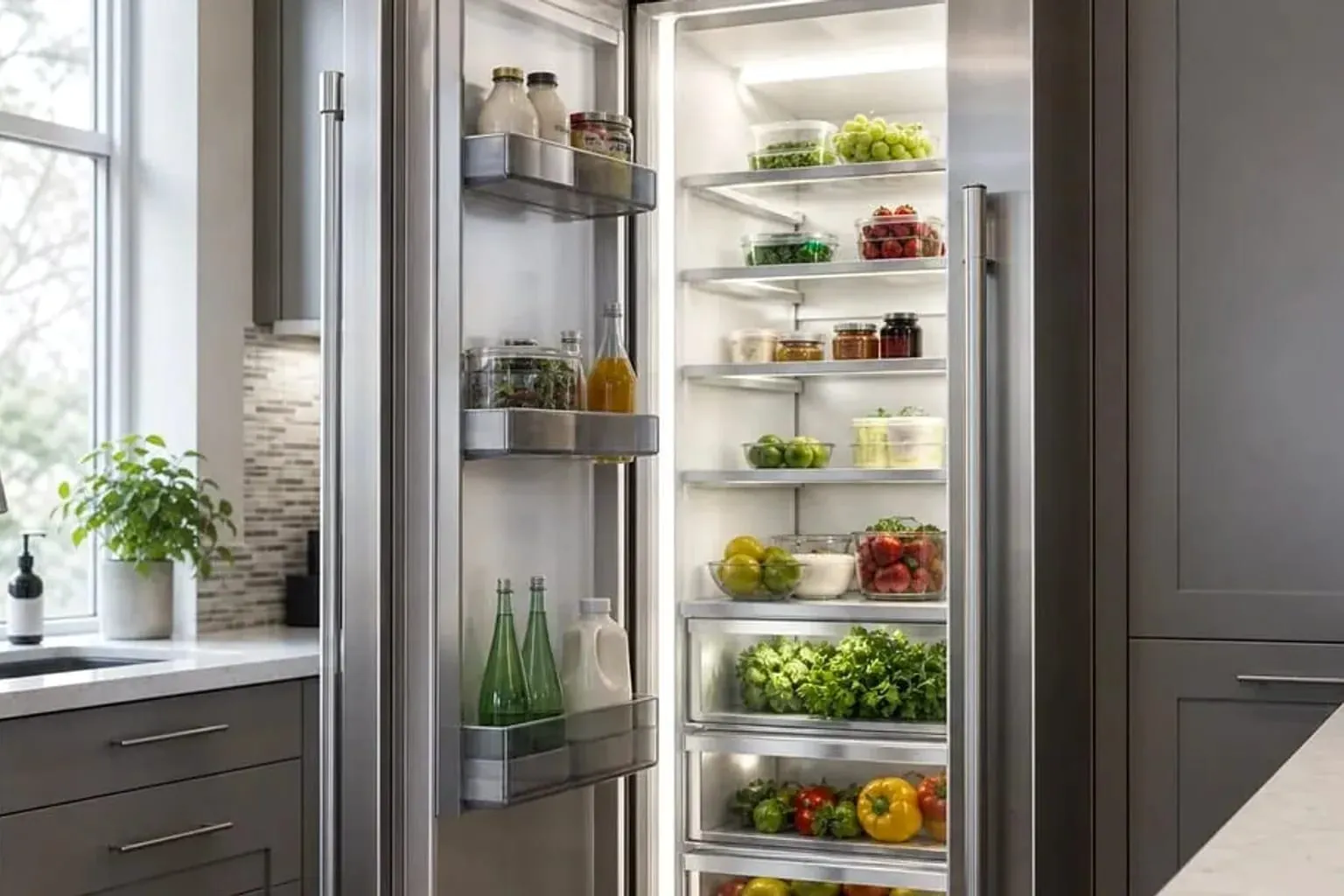
The call sheet from Forest Park read like a control problem: a Sub-Zero 650 freezing lettuce solid on the back shelves of the fresh-food section while the freezer below ran perfectly. Two neighbors and one long internet thread had already convicted the control board. The actual culprit was a stuck air damper, a small mechanical assembly, and the final bill was $385, with the $89 service call waived when the repair went ahead. No board exchange ever touched the ticket.
I want to walk through it reading by reading, because frozen produce is one of the most misread symptoms on these built-ins. It looks electronic. It is usually mechanical. Three measurements separated the guilty part from the accused one, and the gap between those two invoices is not small.
A Call About Frozen Lettuce
The owner described it plainly: lettuce coming out of the crisper frozen into a green brick, berries turned to marbles on the top back shelf, and a freezer that behaved exactly as it should. The unit was a Sub-Zero 650, the over-and-under built-in, about seventeen years in service and never opened for anything worse than a condenser cleaning.
What made the household certain it was the board was the pattern. The dial had not been touched, the freezer was honest, and only one compartment misbehaved, so the thinking went that the brain must be lying to one side. In practice, a 650 that freezes food at the back of the fresh-food section while the freezer holds steady is describing an airflow fault far more often than an electronic one.
The Case Against the Board
I understand why the board takes the blame. It is the most mysterious part in the cabinet, it has a reputation for aging out on units of this era, and our published pricing puts control board work at $350 to $1,250, the most expensive line on the sheet short of sealed-system repair. Fear does arithmetic quickly.
But in 25 years of running these calls, I have learned to make the cheap suspects testify first. A board that is genuinely failing tends to mismanage the whole compartment, not one strip of it. Cold that concentrates low and against the back wall, with normal air a shelf away, points at the doorway where freezer air enters the fresh-food section, and that doorway is mechanical.
Numbers Before Verdicts
First I mapped the compartment shelf by shelf with a calibrated thermometer, front and back, top to bottom. The back wall read 29F at produce level. Mid-cabinet air one shelf forward read a normal 38F. That is a nine-degree split inside a single compartment, and no healthy 650 shows it.
The map matters because it localizes the fault before any part gets accused. Uniform overcooling would point toward the control or its sensor. A cold stripe anchored at the back wall points at incoming freezer air. Lettuce freezes at 32F, so everything in that stripe was living below freezing while the setpoint asked for 38F.
The Damper That Never Closed
Behind the back wall of the fresh-food section sits the air damper, the gate that meters freezer air in to help hold temperature. I pulled the cover and watched it respond to the control. The motor hummed on command, the blade moved, and it never seated. It parked part-open on every cycle, which means freezer air kept flowing whether the compartment wanted it or not.
That is the whole crime. A damper stuck even part-open feeds freezer air into the fresh-food section around the clock, and the food nearest the inlet, on the back shelves, freezes first. The control had been ordering that gate shut for weeks. The gate could not obey.
Clearing the Board's Name
Before writing up the repair, I ran the check that should have happened before anyone said the word board: offset verification. I compared the control's requested setpoint against its own reported reading and against my reference thermometer. The control asked for 38F, reported 38F, and my instrument agreed. The electronics had been telling the truth the entire time.
That five-minute check is the difference between a mechanical fix and an unnecessary board exchange. On this symptom I verify the control every visit, not because it is usually guilty, but because ruling it out cheaply is exactly what a diagnosis is for.
One Assembly, Same Visit
The air damper assembly for these 600 series cabinets rides on the truck, because the failure is common enough to earn a permanent seat. The swap is straightforward once the panel is off: old assembly out, new one in, then a full watch through a control cycle to confirm the blade seats fully closed and opens back up on command.
There was no ordering, no lead time, and no second appointment. By the time I packed up, the back-wall reading had climbed out of the 20s and the owner was restocking the coldest shelf.
The $385 Answer
The invoice came to $385, parts and labor, and the $89 service call was waived because the repair went ahead. On our published Santa Clara pricing this job bills in the small-parts band alongside ice maker and water line work, which runs $275 to $850, so it landed in the lower half. Damper repairs on these cabinets typically finish between $275 and $500 installed.
Set that against the accusation. The board exchange this symptom usually provokes runs $350 to $1,250 on the same sheet, and on this unit it would have fixed nothing, because the board was never broken. The cheapest suspect in the story turned out to be the guilty one, which is how these calls usually end.
If Your Produce Keeps Freezing
Before you approve an expensive part, do two free things. First, make sure the back-wall vents are not blocked by packed shelves; trapped cold air can freeze produce with nothing broken at all. Second, ask whoever services it to map temperatures shelf by shelf and verify the setpoint against a real thermometer before condemning electronics.
If the cold is anchored at the back wall and the setpoint verifies honest, expect a damper, not a board. Those readings take minutes to gather, they are easy to show a homeowner, and they are the reason this repair cost $385 instead of a four-figure guess.