
Decision guide · 7 min read
Repair or replace an aging Sub-Zero: a Santa Clara owner's math
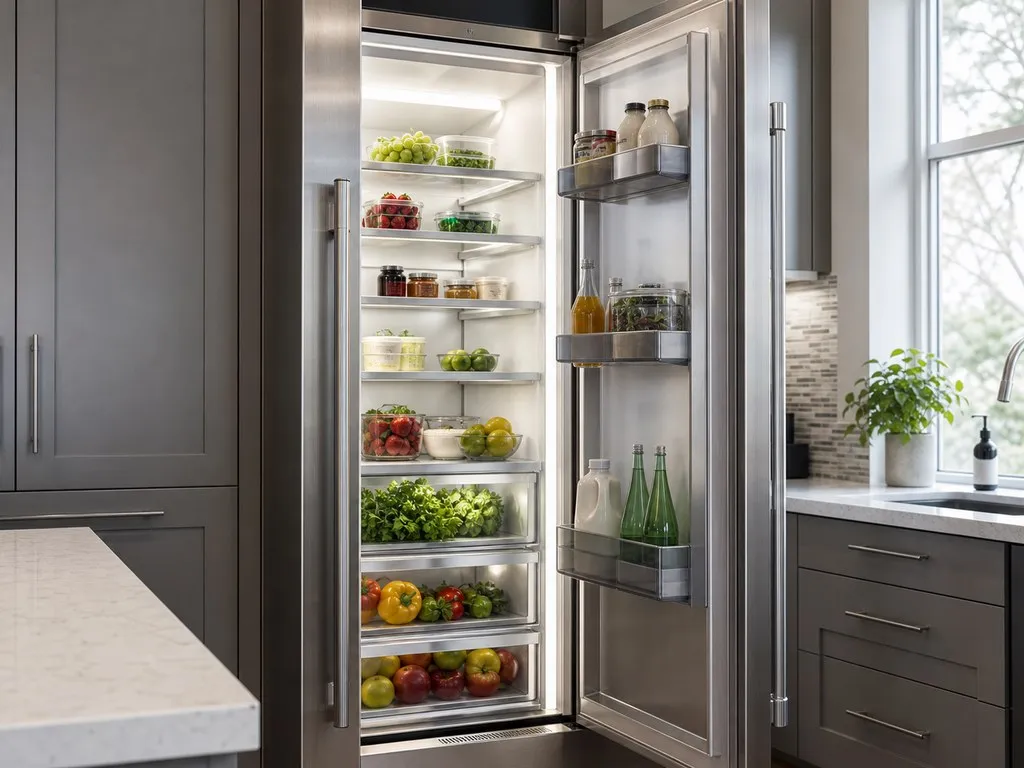
Sooner or later every Santa Clara household with a built-in Sub-Zero faces the same fork in the road: the unit needs a real repair, the quote isn't trivial, and somebody asks whether it's finally time to replace the whole thing. It's a fair question, and the honest answer depends less on the unit's age than on which part has failed and what a like-for-like replacement would actually cost in a built-in kitchen.
This guide lays out the math the way we'd walk a neighbor through it — no pressure toward the bigger ticket, just the numbers and the few rules of thumb that hold up across the city's very different kitchens.
Two eras of Santa Clara built-ins, two different calls
Santa Clara's housing splits the decision neatly. Around the Old Quad and Forest Park, plenty of built-ins date to the 1990s and early 2000s — Classic-series columns and side-by-sides that have cooled faithfully for two decades and are now reaching the age where compressors, control boards and sealed systems start to tire. In the Rivermark townhomes and the newer north-side remodels, the units are far younger, often integrated panel-ready columns still well inside their reasonable service life.
What a replacement really costs in a built-in kitchen
The number that changes everything is the true cost of replacing a built-in, and it is not the sticker price of the appliance alone. A comparable Sub-Zero column or built-in runs well into five figures, and because these units are sized to a specific cabinet opening and panel, swapping one is rarely a drop-in. Cabinet modification, panel refitting, water-line and electrical work, delivery and disposal stack on top. Against a replacement that can total far more than the appliance itself, a great many repairs look modest by comparison — which is precisely why Sub-Zero built these units to be rebuilt rather than discarded.
What's worth fixing on a Classic — and what gives you pause
On an older Classic unit, the everyday repairs are almost always worth doing. Door gaskets, evaporator and condenser fans, thermistors, defrost components, ice-maker modules, water valves and even control boards are bounded, parts-available jobs that buy years of reliable cooling for a fraction of replacement. The repair that earns a real conversation is a failed sealed system — a compressor or a refrigerant leak — on a unit already past twenty years. That work is the most expensive single repair, and when it lands on a very old cabinet it's reasonable to weigh it against starting fresh.
Parts availability and the age question
A worry we hear often is whether parts still exist for an older Sub-Zero. For the most part, yes — the built-in platform has been remarkably consistent, and genuine OEM gaskets, fans, valves, sensors and boards remain available for the Classic units common in Santa Clara's older neighborhoods. That availability is a big reason a twenty-year-old built-in is usually still a sound thing to repair. Where it gets thinner is on certain discontinued cosmetic and trim pieces, which matters more for appearance than for function.
When it's reasonable to walk away
There's a point where replacement is the rational call, and we'll say so plainly. If a unit past its second decade needs a full sealed-system rebuild and is also showing other tired components — a marginal board, worn fans, a cabinet that's been opened repeatedly — the combined cost can approach replacement territory, and a newer integrated unit may serve better for another twenty years. The test we use is simple: if a single repair runs less than roughly half the all-in replacement cost and the rest of the unit is healthy, fix it. If you're stacking a sealed-system job onto an already worn-out cabinet, it's fair to consider a new one.
How we keep the decision honest
Before any repair-versus-replace verdict, we diagnose the actual fault and test the suspected part rather than condemning the unit on its age alone. You get the real repair number, an honest read on the sealed system's condition, and our view of how many years the fix should buy you — then you decide. For most Santa Clara built-ins, especially the well-kept Classic units in Old Quad and Forest Park, the repair still wins. See our repair pricing for typical ranges, and our sealed-system page for the one repair that most often tips the math.